
Welcome to PAN International, your global partner for premium Indian agro-products and sustainable export supply. With years of expertise in sourcing, processing, and exporting a diverse range of commodities — from grains, pulses, spices, and oil see...
- (+91) 9717057953
- info@paninternational.in
- First Floor, E-82 F/F, Khno 54/19/1, Palam Colony, Raj Nagar-Ii Road, , South West Delhi, Delhi, India. 110077
© 2020 PAN International. All Rights Reserved
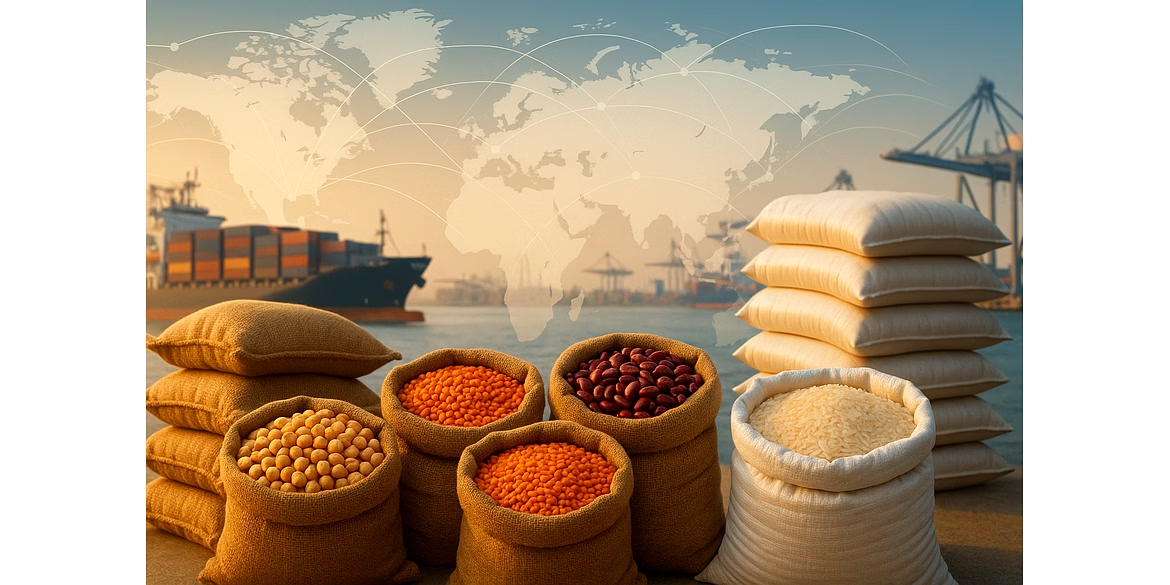
Importing Indian grains and pulses has become a strategic priority for food manufacturers, wholesalers, distributors, and retail brands worldwide. In 2025, India has emerged as a major force in global food trade, driven by rising international demand for its high-quality pulses and grains. With the world shifting toward healthier, plant-based diets, Indian crops are increasingly preferred in global B2B sourcing.
Key pulses gaining demand:
• Chickpeas
• Lentils
• Pigeon peas (Toor)
• Kidney beans (Rajma)
• Green gram (Moong)
Key grains in demand:
• Wheat
• Rice
• Specialty grains
For global buyers looking to import Indian grains and pulses, India remains a preferred sourcing destination due to:
• High agricultural diversity
• Competitive pricing
• Strong global supply chains
• A skilled farming ecosystem
• Growing adoption of agritech and quality systems
As a trusted Indian exporter, PAN International supplies premium-quality grains and pulses supported by sustainable farming networks, strict quality checks, and efficient global logistics. This B2B buyer’s guide explains everything importers must evaluate before sourcing grains and pulses from India, including export quality parameters, documentation, and compliance.
1. Key Quality Parameters Importers Should Verify
To ensure consistency, safety, and brand reputation, importers of Indian grains and pulses should carefully verify core export quality parameters. Working with an experienced exporter like PAN International ensures that these standards are built into every shipment.
✔ 1. Moisture Level
Moisture is one of the most critical parameters in pulses and grains quality control. The acceptable range for most pulses is typically 10–13%. Moisture above this range can lead to:
• Fungal growth
• Insect infestation
• Reduced shelf life
PAN International uses controlled storage, scientific post-harvest handling, and moisture monitoring to maintain safe levels suitable for long-distance export shipments.
✔ 2. Purity & Admixture
Importers should check the purity of Indian pulses and grains to ensure they meet export specifications. Important checkpoints include:
• No stones, dust, or foreign matter
• Minimal damaged or broken grains
• Consistency in size and color
• Proper cleaning and sorting
PAN International ensures advanced cleaning and sorting under expert supervision so that importers receive clean and food-safe consignments aligned with their market standards.
✔ 3. Grain Size & Uniformity
Uniform grain size and shape are crucial for industrial processing, packaging automation, and retail shelf presentation. Especially when importing Indian pulses for private label brands or food manufacturing, consistency reduces wastage and improves product appearance.
PAN International supplies export-grade, calibrated pulses and grains that meet international buyer specifications and are suitable for high-volume B2B operations.
✔ 4. Appearance & Color
Natural appearance and uniform color are indicators of freshness, proper processing, and correct storage. PAN International avoids artificially polished or over-processed grains unless specifically requested by the buyer, helping maintain a more natural, health-focused image for your brand.
✔ 5. Pest & Insect-Free Guarantee
International buyers must ensure that imported Indian grains and pulses are free from live insects, larvae, and visible infestation. PAN International follows:
• Hygienic storage practices
• Safe fumigation protocols
• Phytosanitary compliance for destination markets
These measures help importers maintain their own national food safety compliance while ensuring consistent product quality in retail and foodservice channels.
2. Essential Export Packaging Options
Proper export packaging is critical when importing Indian grains and pulses across long distances and varied climates. Packaging must protect the consignment from moisture, pests, and physical damage while meeting the importing country’s regulations and retailer expectations.
PAN International offers a range of packaging options tailored for B2B buyers, wholesalers, and private label brands:
✔ PP Bags (10kg, 25kg, 50kg)
These polypropylene bags are secure, moisture-resistant, and ideal for bulk shipments of pulses and grains. They are widely used in global trade lanes and can be customized as per buyer needs.
✔ Jute Bags (Eco-Friendly)
Jute bags are sustainable and breathable, making them popular in European, African, and environmentally conscious markets. Importers looking to highlight eco-friendly sourcing of Indian pulses often prefer this option.
✔ Vacuum or Sealed Bags (For Premium Buyers)
Vacuum or sealed packaging is ideal for premium retail brands and specialty food distributors, especially when longer shelf life and high hygiene levels are required in export consignments.
✔ Custom Private Label Packaging
PAN International supports private label and brand-focused buyers with customized packaging, including branding, design, and label information tailored to local regulations.
Every shipment is reinforced using export-grade packing standards to prevent damage or contamination in transit. Importers can also coordinate packaging options with our team to match their own retail-ready Indian grains and pulses requirements.
3. Mandatory Export Documentation Importers Should Expect
Accurate and complete export documentation is essential for smooth customs clearance when importing Indian grains and pulses. Professional exporters like PAN International manage this end-to-end, reducing delays, demurrage, and compliance risks for buyers.
✔ Commercial Invoice
Contains detailed product description, pricing, HS codes, quantity, and terms. It is a key reference document for customs authorities and banks.
✔ Packing List
Provides clarity on how the consignment is packed—number of bags, weight per bag, total net and gross weight—ensuring transparency in packaging and inventory.
✔ Certificate of Origin (COO)
Issued by authorized agencies, this confirms that the grains and pulses are of Indian origin. It may also support preferential duty benefits under trade agreements.
✔ Phytosanitary Certificate (PQ Certificate)
Confirms that the consignment is inspected and certified as pest-free and safe for import, as per the importing country’s plant quarantine norms.
✔ Fumigation Certificate
Provided where required, especially for pulse shipments. It documents fumigation carried out as per international standards to prevent pest risks.
✔ Quality & Lab Analysis Report
Includes test results for moisture, purity, grain size, and other quality parameters. This is especially important for food manufacturers and large distributors.
✔ Bill of Lading or Airway Bill
Serves as proof of shipment and is required by both banks and customs. It records shipment details, vessel or flight information, and consignee details.
PAN International handles all export documentation for Indian grains and pulses with complete accuracy and transparency, helping B2B buyers maintain compliance and traceability. For a quick reference, importers can create an internal export documentation checklist based on these documents.
4. Compliance Standards Importers Must Ensure
Different countries impose specific regulations for importing grains and pulses, especially from high-export nations like India. Importers must ensure that their suppliers understand and comply with these food safety and regulatory standards.
✔ Maximum Residue Limits (MRL)
MRL regulations ensure that pesticide residues and other chemicals in Indian grains and pulses remain below permissible limits. PAN International works with farmers and labs to ensure safe, compliant levels.
✔ Food Safety Standards
Depending on the destination market, shipments must comply with Codex, FDA, EFSA, or relevant national food safety authorities. For large importers and supermarket chains, this alignment is crucial for risk management.
✔ Packaging Label Requirements
Labels typically require batch numbers, net weight, country of origin, product name, and sometimes allergens or cooking instructions. PAN International supports buyers in meeting local labelling norms when exporting Indian pulses and grains.
✔ Pest Risk Management
Depending on the country, importers may need fumigation, heat treatment, or specific handling protocols. PAN International follows globally accepted quality protocols and sustainability-driven farming practices to ensure compliance and smooth market entry.
By partnering with a compliant Indian exporter, B2B buyers reduce the likelihood of shipment rejections, delays, and reputational risks in their markets.
5. Why Importers Choose PAN International for Grains & Pulses
PAN International is built on values of transparency, sustainability, and modern agritech-driven operations. For importers seeking a reliable partner in India for sourcing grains and pulses, PAN International offers end-to-end support—from farming networks to logistics.
✔ Ethical & Transparent Sourcing
We work directly with farmers and rural communities to ensure fair pricing, traceable sourcing, and responsible farming practices. This helps B2B buyers align with their ESG and sustainability commitments.
✔ Rigorous Quality Assurance
Every batch of Indian grains and pulses undergoes:
• Visual inspection
• Moisture testing
• Cleaning & grading
• Sample approval before final dispatch
✔ Sustainable & Responsible Farming Support
PAN International is aligned with a mission to empower rural communities and promote eco-friendly agriculture, which benefits both farmers and global buyers seeking sustainable Indian pulses and grains.
✔ Reliable Global Logistics
Strong freight partnerships and an experienced logistics team help ensure smooth, on-time delivery worldwide. Importers benefit from optimized container loading, route planning, and documentation handling.
✔ Customer-First B2B Service
PAN International prioritizes consistent supply, reliable communication, and long-term partnerships. Whether you are a food manufacturer, wholesaler, or retailer, our team supports you through every stage of importing Indian grains and pulses.
Conclusion: Source Grains & Pulses from a Trusted Export Partner
Importing grains and pulses from India offers excellent growth opportunities for brands seeking nutritious, plant-based, and affordable food products. However, success depends on working with a dependable and transparent export partner.
With PAN International, importers benefit from:
• Export-grade quality control
• Clean, safe, and sustainably sourced produce
• Full compliance with documentation and regulations
• Strong supply chain consistency
• Ethical and fair business practices
PAN International is more than an exporter of Indian grains and pulses — we are your trusted partner in building a reliable and sustainable agricultural supply chain. Importers looking to expand their sourcing footprint in India can collaborate with PAN International to secure quality, compliance, and long-term value.
