
Welcome to PAN International, your global partner for premium Indian agro-products and sustainable export supply. With years of expertise in sourcing, processing, and exporting a diverse range of commodities — from grains, pulses, spices, and oil see...
- (+91) 9717057953
- info@paninternational.in
- First Floor, E-82 F/F, Khno 54/19/1, Palam Colony, Raj Nagar-Ii Road, , South West Delhi, Delhi, India. 110077
© 2020 PAN International. All Rights Reserved
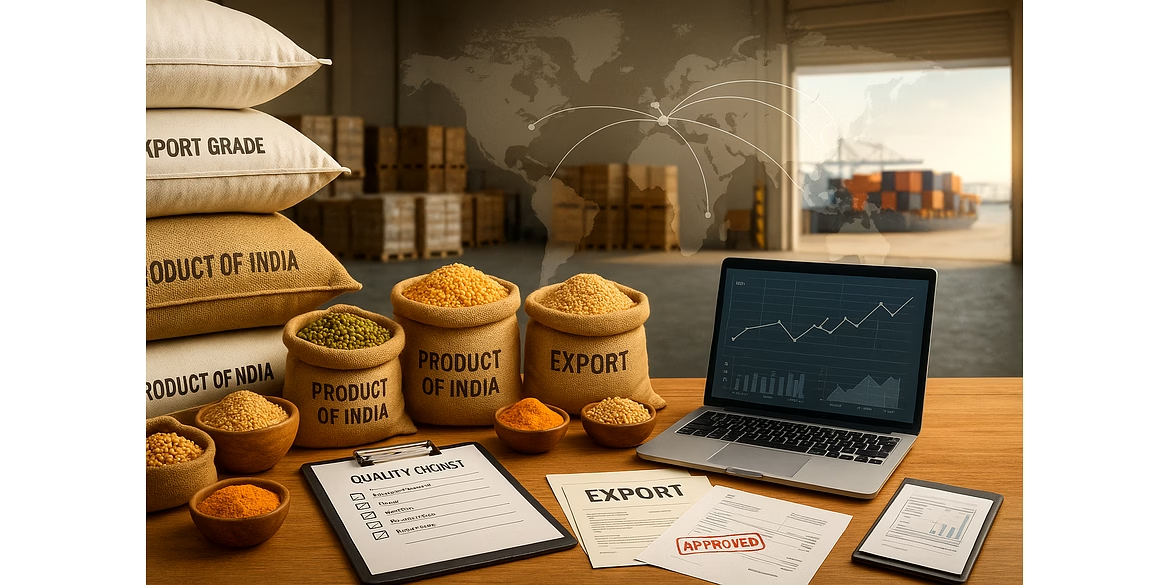
How to Choose the Right Indian Agri Export Partner
India is one of the world’s largest exporters of agricultural commodities, supplying global markets with a diverse range of grains and pulses, spices and herbs, oil seeds, and fresh produce. As demand rises for clean-label foods, sustainable sourcing, and transparent supply chains, importers are actively seeking reliable Indian exporters who deliver quality and consistency at scale.
However, sourcing from India successfully requires partnering with the right exporter—an organization that combines agricultural expertise, stringent quality control, ethical sourcing, and dependable logistics. Choosing the wrong partner can lead to shipment rejections, compliance issues, and brand risk; choosing the right partner builds a stable, long-term sourcing base.
This guide highlights what global importers should evaluate before choosing an Indian export partner—and explains how PAN International, a trusted Indian agri-products exporter, fulfills all those requirements across multiple product categories.
1. Quality Standards: The First Priority for Every Importer
Quality is the foundation of any successful agri-import program. When sourcing from India, importers should clearly define and verify product quality parameters for grains, pulses, spices, oil seeds, and fresh produce.
✔ Moisture Content
Low and controlled moisture levels prevent fungal growth, reduce insect activity, and preserve shelf life—especially critical for pulses, cereals, nuts, and seeds shipped in bulk containers.
✔ Purity Levels
Food-grade agri-exports should be free from stones, dust, husk, stems, foreign seeds, and other contaminants. High purity directly supports brand reputation and consumer safety in destination markets.
✔ Grading Consistency
Uniform grain size, color, and appearance are essential for both industrial applications and retail shelves. Consistent grading reduces processing losses and supports strong shelf presentation for private label brands.
✔ Microbiological & Chemical Safety
Importers must ensure that products comply with:
• MRL (Maximum Residue Limit) regulations
• Microbial load standards
• Aflatoxin limits (especially for peanuts, sesame, and some spices)
✔ Natural & Unadulterated Product Guarantee
Exporters should commit to no artificial colors, no chemical polishing, and no harmful additives. PAN International ensures all these quality parameters through advanced cleaning systems, accredited laboratory testing, and expert supervision across all product lines.
2. Traceability & Transparency: Non-Negotiable for Modern Buyers
Global buyers now demand full visibility into where their food comes from and how it is produced. Traceability and transparency are especially important for retailers, food manufacturers, and brands managing stringent ESG and compliance commitments.
✔ Batch-Level Traceability
Importers should verify that the exporter can trace each lot from farm or sourcing region to final packing, including information on harvest date, region, and product variety.
✔ Complete Sourcing Transparency
A responsible exporter shares information on farmer groups, FPOs, and sourcing networks, giving buyers confidence that supply chains are ethical and stable.
✔ Documentation Linked to Testing
Every batch should be backed by lab reports for:
• Moisture and water activity
• Purity and physical parameters
• MRL and pesticide residues
• Aflatoxin levels
• Microbial safety tests where applicable
✔ Ethical Supply Chain Management
Exporters must demonstrate fair treatment of farmers and promote sustainable cropping systems. PAN International follows a strict traceability model that gives importers clear visibility from farm to container on every shipment.
3. Export Documentation: Essential for Smooth Customs Clearance
Documentation is a critical factor in international trade. Missing or inaccurate documents can lead to delays, detention charges, or even shipment rejections. Importers should ensure that their Indian agri exporter consistently provides a complete, accurate document set.
• Phytosanitary Certificate
• Certificate of Origin
• Fumigation Certificate (if required by the destination country)
• Pesticide Residue / MRL Report
• Aflatoxin & Microbial Test Reports
• Commercial Invoice
• Packing List
• Bill of Lading or Airway Bill
Incorrect or incomplete documentation can cause delays, port rejections, and regulatory penalties. PAN International ensures accurate documentation for every shipment, helping importers maintain a smooth, compliant Indian agri import process.
4. Packaging Standards: Protecting Quality Through Transit
Export-grade packaging is essential for preserving product quality during long-distance transport and varied climatic conditions. Importers should confirm that their exporter uses appropriate packaging for each commodity and market.
✔ PP Woven Bags (25kg / 50kg)
Commonly used for grains, pulses, and oil seeds, PP woven bags are durable and moisture-resistant, ideal for bulk B2B buyers and industrial users.
✔ Jute Bags
Eco-friendly, breathable jute bags are especially popular in European and sustainability-focused markets, providing a natural presentation for agri-products.
✔ Vacuum Packs / Retail Packs
For spices, premium pulses, and high-value seeds, vacuum or nitrogen-flushed retail packs help maintain freshness, color, and aroma on retail shelves.
✔ Ventilated Crates
Fresh produce exports require ventilated plastic crates or cartons that allow airflow and protect fruits and vegetables from bruising and moisture build-up.
✔ Custom Private Label Packaging
Supermarket chains and wholesalers often require private label consumer packs with specific branding, barcode formats, and labelling regulations. PAN International offers all of these packaging formats with strict hygiene controls and traceability labeling on every pack and pallet.
5. Logistics & Lead Time: A Critical B2B Factor
Reliable logistics is just as important as product quality. A strong Indian exporter should be able to manage port operations, container bookings, and seasonal volumes efficiently, keeping importers informed at every step.
✔ Consistent Supply Availability
Importers need assurance that their exporter can deliver consistent volumes during peak and off-peak seasons, avoiding stockouts in destination markets.
✔ Efficient Port Handling
Experienced export teams ensure smooth port coordination, minimizing demurrage, detention, and unexpected delays at Indian terminals.
✔ Reefer / Container Management for Perishables
For fresh produce and temperature-sensitive items, expertise in reefer containers and cold-chain logistics is essential to maintain quality on arrival.
✔ Accurate Scheduling & Communication
Importers need clear timelines, shipment updates, and proactive communication if schedules change. With a strong global logistics network, PAN International ensures reliable, timely deliveries that support long-term B2B planning.
6. Sustainability & Ethical Practices: The New Global Standard
Today’s importers increasingly prefer exporters who champion sustainable farming and ethical business practices. This is driven not only by regulations but also by consumer expectations for responsibly sourced products.
✔ Sustainable farming practices with lower chemical usage, soil-health focus, and water conservation.
✔ Farmer empowerment through fair pricing, technical support, and long-term collaboration.
✔ Environment-friendly operations using cleaner production methods and reduced waste.
✔ Social responsibility initiatives that support rural communities and resilient livelihoods.
Sustainability is a core value of PAN International and shapes our sourcing, processing, and logistics decisions across every product category.
7. Customer Support & Partnership Approach
Long-term agri sourcing requires more than transactional buying; it thrives on partnership thinking. The best Indian agri exporters operate as an extension of the buyer’s procurement and quality teams.
✔ Clear communication with fast responses and transparent updates.
✔ A problem-solving mindset to handle documentation, logistics, and compliance challenges.
✔ Flexibility and customization in packaging, quality specifications, and testing protocols.
✔ Dedicated B2B support for distributors, wholesalers, processors, and retail chains.
PAN International’s customer-first approach ensures seamless cooperation and long-lasting partnerships, helping buyers grow their portfolios of Indian agri-products with confidence.
Conclusion: Choosing the Right Export Partner Creates Long-Term Success
Importing agricultural products is about more than procurement—it is about trust, consistency, and reliability across every shipment. The right Indian agri export partner will protect your brand, support your growth plans, and help you meet evolving regulatory and consumer expectations.
When importers choose PAN International, they partner with an exporter that offers:
• Ethical and traceable sourcing
• Strict quality assurance and accredited testing
• Certified and safe food products across categories
• Modern agritech integration and process automation
• Sustainable and responsible farming partnerships
• Reliable global logistics and container management
• Transparent, customer-centered communication at every step
PAN International is not just an exporter—we are your partner in building a clean, dependable, and future-ready agricultural supply chain from India to the world.
